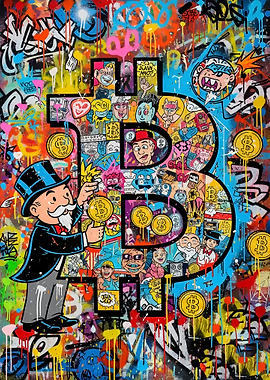
A Currency That Needed an Image
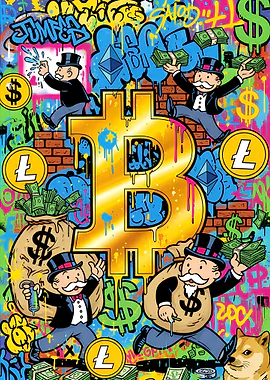
Bitcoin has no banknote, no coin, no building — nothing physical to put on a poster the way a bank or a government can. So the visual culture that grew up around it had to invent its own iconography almost from scratch, and it borrowed heavily from a source that already had a rebellious, anti-establishment visual vocabulary built in: graffiti and street art.
Why Graffiti Style Fit the Message
Street art has always carried an implicit stance — unsanctioned, outside official channels, claiming space that wasn't given to it. That framing lines up neatly with how early Bitcoin adopters talked about the currency itself: a system built outside traditional banking, spreading through informal networks rather than official ones. Spray-paint textures, tag-style lettering, and stencil-like bold shapes became shorthand for that same outsider energy.
From Meme to Metal Print
What started as forum avatars and meme graphics has matured into a recognizable aesthetic in its own right — bold, high-contrast, unapologetically loud — which translates naturally to a printed medium built around strong color separation. It's a genuinely new visual culture, less than two decades old, that already has its own printable style.