Selling a Place Most People Would Never Visit
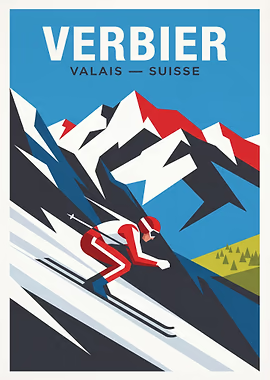
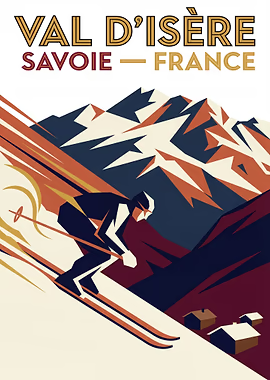
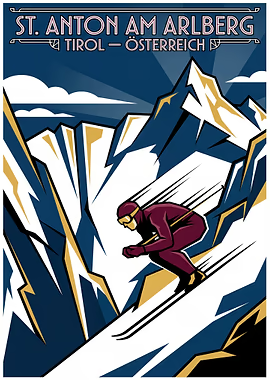
Mid-century alpine travel posters had an unusual job compared to most advertising art: they had to sell an entire destination, sight unseen, to an audience that mostly traveled by train and had never skied. That meant leaning hard into simplified, idealized geometry — sharp peaks, deep blue skies, a single skier carving a clean line — rather than literal depictions of any specific slope.
Courchevel's Poster-Built Reputation
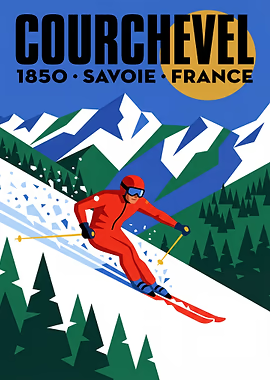
Courchevel, developed in the French Alps starting in the late 1940s, is a rare example of a resort essentially built alongside its own marketing. Unlike older alpine towns with centuries of history to lean on, Courchevel needed to manufacture an identity fast — and travel poster art was a huge part of how it did that, presenting a brand-new resort with the same confident visual language as long-established ones.
Why the Style Still Feels Aspirational
That original design brief — make an unfamiliar mountain look impossibly appealing using bold shapes and color rather than realism — is exactly why these posters still work as wall art for people who've never set foot on a ski slope. The appeal was never really about accuracy. It was about aspiration, rendered in flat color and confident line.