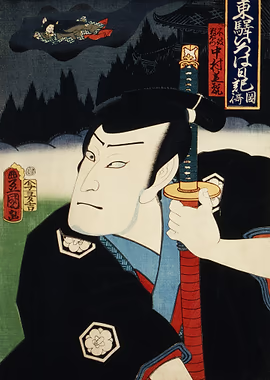
Ukiyo-e as Celebrity Culture
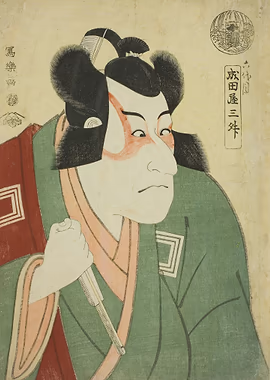
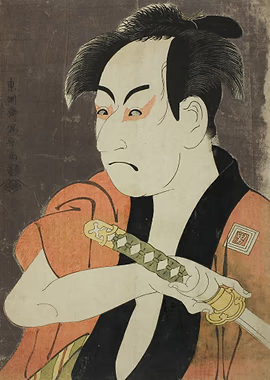
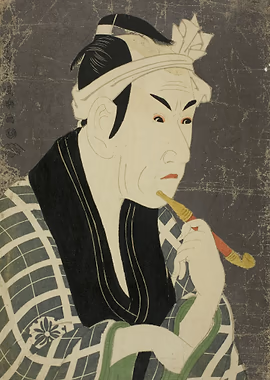
Japanese woodblock printing, or ukiyo-e, flourished through the Edo and Meiji periods as a genuinely popular art form — affordable, widely reproduced, and often focused on the era's biggest stars: kabuki theater actors, portrayed mid-performance in dramatic, exaggerated poses. It functioned, in many ways, like celebrity poster art centuries before the format existed elsewhere.
Toyohara Kunichika's Place in the Tradition
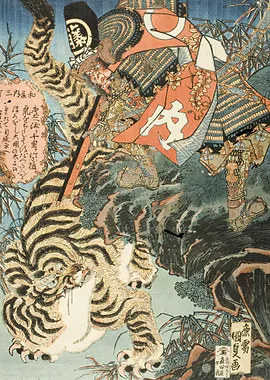
Toyohara Kunichika, active through the late 19th century, was among the most prolific ukiyo-e artists working in this genre, particularly known for kabuki actor portraits rendered with bold color blocking and dynamic composition. His samurai and warrior figures carry the same theatrical intensity as his stage subjects — dramatic expressions, sharp diagonal poses, and richly patterned costume detail.
A Style Built for Bold Reproduction
Woodblock printing's technical constraints — flat color fields, strong outlines, limited gradation — produced a visual style that translates unusually well to modern printing methods, metal included. The same qualities that made these images reproducible by hand over a century ago make them read cleanly and boldly today.