A Design Brief With No Room for Error
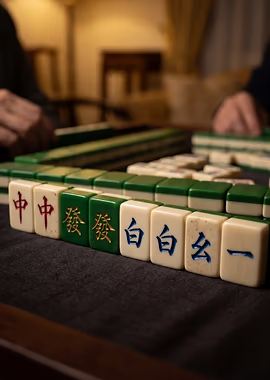
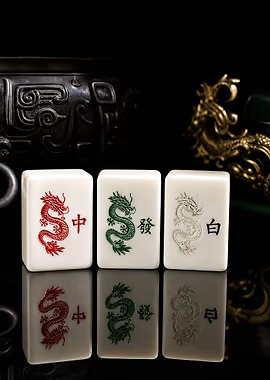
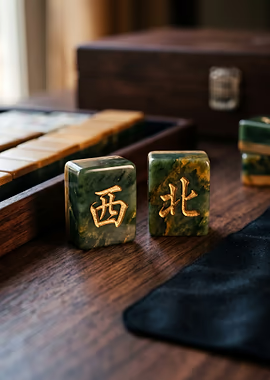
A mahjong set has to satisfy an unusually strict design brief: every one of its carved characters, bamboo, and circle tiles needs to be instantly distinguishable from every other tile, at a glance, often at odd angles, by players who need to sort a full hand in seconds. That's a much harder constraint than it sounds, and it's why traditional tile faces are such a masterclass in economical symbol design.
Where the Symbols Come From
The three suits — circles (representing coins), bamboo (representing strings of coins), and characters (representing numbers) — trace back to the game's likely origins in 19th-century China, tied to earlier card games built around denominations of currency. Centuries of repetition refined each symbol down to its simplest, most legible form — which is exactly what makes them so satisfying to look at purely as graphic shapes, independent of the game itself.
A Pattern Built for Repetition
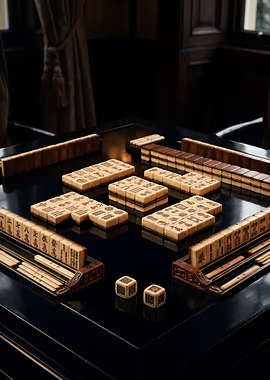
Arranged together as a full set, mahjong tiles create the kind of dense, rhythmic pattern that works especially well as a large-format print: enough variation to reward a close look, enough repetition to read as a single cohesive image from across a room.