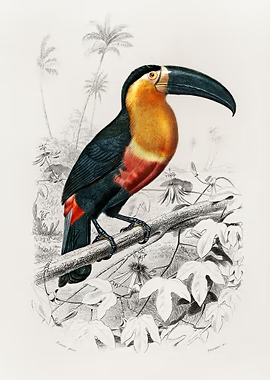
Art in the Service of Science
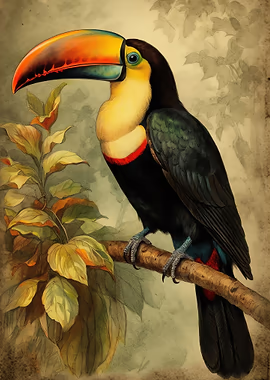
Before photography could capture wildlife in the field, the only record of a species' color, plumage, and form was whatever an illustrator could observe and render by hand. Naturalist bird prints — the tradition this toucan illustration belongs to — were scientific documents first: precise studies meant to travel in expedition journals and academic publications, cataloguing species for people who would likely never see the bird itself.
That constraint produced a very specific visual style: crisp outlines, accurate proportions, and color used to inform rather than to editorialize.
Why the Toucan Became a Favorite Subject
Few birds reward this kind of illustration like a toucan. The genus Ramphastos is defined by that oversized, vividly colored bill — a feature so graphic that it practically composes itself on the page. Naturalist illustrators gravitated toward subjects like this precisely because the animal's own design did much of the artistic work; render the bill's color transitions accurately and you already have a striking image.
From Field Notebook to Wall Art
What reads today as decorative — a bold, colorful bird print — was originally a working reference tool. That utilitarian precision is exactly what gives the style its lasting appeal on a wall: it's detailed enough to reward a close look, but graphic enough to work as a single strong image from across a room, the same balance that made it useful in a field guide in the first place.